
Most standard linear actuators are simple workhorses: You apply power, they extend. You reverse polarity, they retract.
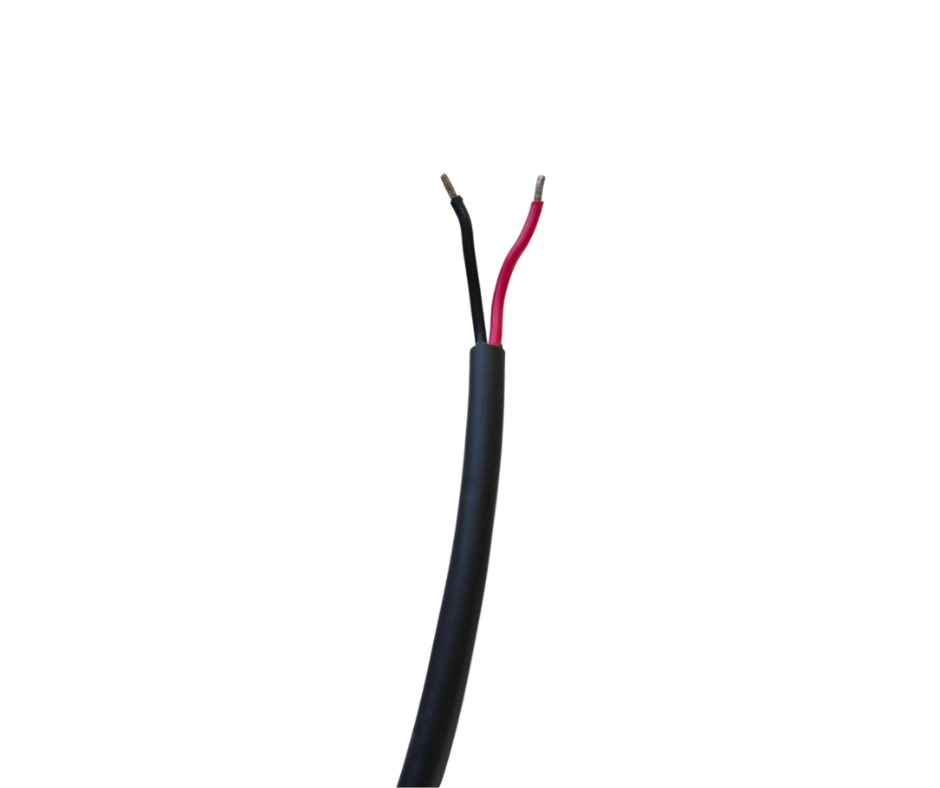
Standard (2-Wire)
"Blind" Power Only
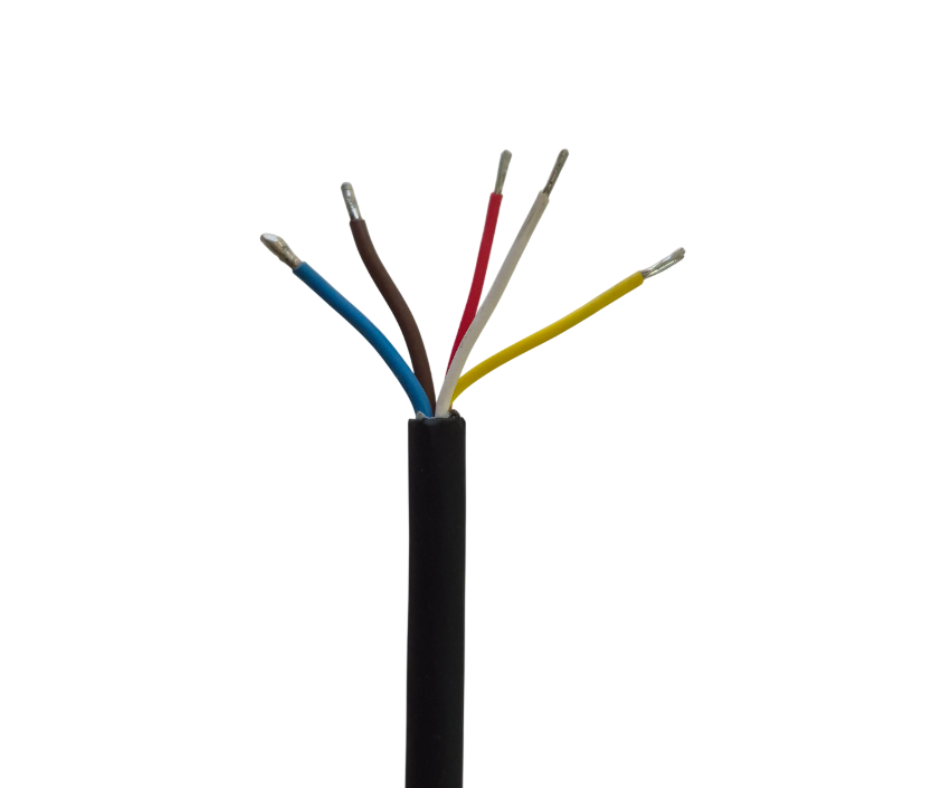
Feedback (5-Wire)
Power + Data Signal
But standard actuators are "blind." They don't know if they are halfway extended or 10% extended. They simply run until they hit the internal limit switch, which cuts the power to the motor automatically.
If you need to know exactly where the actuator is, or if you need to control the stop-point yourself, you need a unit with Feedback Signals.
🛑 Myth Buster: Feedback is NOT Speed Control
We often get asked: "Can I use the Potentiometer to speed up or slow down the actuator?"
The answer is NO.
Feedback is a sensor, not a driver. Think of it like a speedometer in a car:
The speedometer tells you how fast you are going, but turning the needle on the dashboard won't make the car go faster!
1. Potentiometer Feedback (POT)
The "Memory" Sensor.
A Potentiometer is an analog resistor built into the actuator (typically 5kΩ or 10kΩ). As the rod moves, the resistance changes relative to the position.
Notice the extra wires: Power (Red/Black) + Sensor (Blue/White/Yellow).
The Big Advantage: Absolute Position
Potentiometers are "Absolute." This means if the power goes out and you move the actuator by hand, the sensor still knows exactly where it is when the power comes back on. It never "forgets" its position.
- Best For: Preset positions (e.g., "Press Button 1 to go to 50% height").
- Pros: Simple to use, retains position after power loss.
2. Hall Effect Sensor (HS)
The "High-Precision" Sensor.

Hall sensors require precise wiring to a PLC or Sync Controller.
Hall Effect sensors are digital. They use a magnetic field to send electronic pulses (0s and 1s) as the motor spins. A microcontroller counts these pulses to calculate distance.
The Big Advantage: Resolution
Because it counts motor rotations, the resolution is incredibly high. This makes it the industry standard for Synchronized Movement (keeping 2 or 4 actuators moving at the exact same speed).
- Best For: Syncing multiple actuators and robotics.
- Pros: Very long life (no contact parts), extremely high resolution.
- Cons: It is "Incremental." If power is lost, it forgets where it is and usually needs to retract fully (Home) to reset its counter.
3. Reed Switch
The "Pulse Counter" Alternative.
Similar to the Hall Sensor, a Reed Switch sends a pulse signal as the motor turns. However, it uses a physical magnetic switch (NC Contact) rather than a solid-state sensor.

Reed Switches are often mounted externally (white bands shown above), allowing for adjustment.
It is often found in heavy-duty industrial units or gate motors. Like the HS, it provides a "Pulse Count" that your controller tracks to determine position.
- Note: Like HS, Reed Switches are "Incremental." If power is lost, the system needs to run a homing routine to reset the counter.
4. Endstop Signal
The "Status Update" (Warning: Read Carefully!)
This is distinct from the options above. Instead of tracking movement, it simply sends a signal when it hits the Fully Open or Fully Closed position.
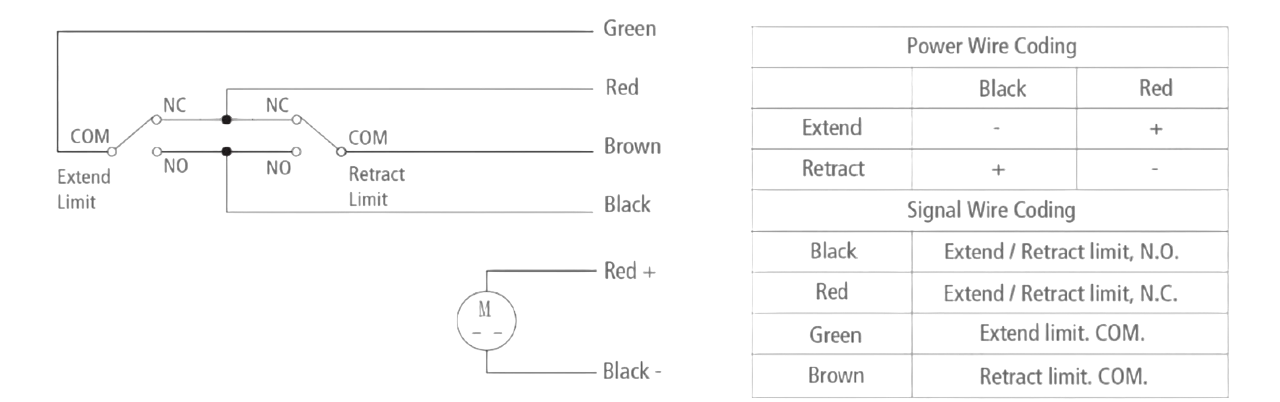
⚠️ CRITICAL WARNING: Controller-Dependent
In some industrial actuators (including certain LINACT signal-only configurations), the Endstop Signal does not cut motor power. Instead, it only reports the end position to your PLC.
In these cases, your controller MUST immediately remove power. If it fails to do so, the actuator can stall and burn out.
Quick Comparison
| Type | What it tells you | Power Loss? |
|---|---|---|
| Potentiometer | "I am at 43% extension." | Remembers ✅ |
| Hall Sensor (HS) | "I have moved 1,024 steps." | Forgets (Reset Needed) ❌ |
| Endstop Signal | "I have arrived at the end." | N/A (Simple Switch) |
Never connect the thin sensor wires directly to the battery, or you will burn out the sensor instantly.
Need precise control?
We stock actuators with POT, HS, and Limit Switch signals. Contact our engineers to find the right one for your controller.
CONTACT US
Recent Comments